Liquid AI presents LFM3 for text, images and audio
Liquid AI published the LFM3 family and practical material on adapting models to a specific task.
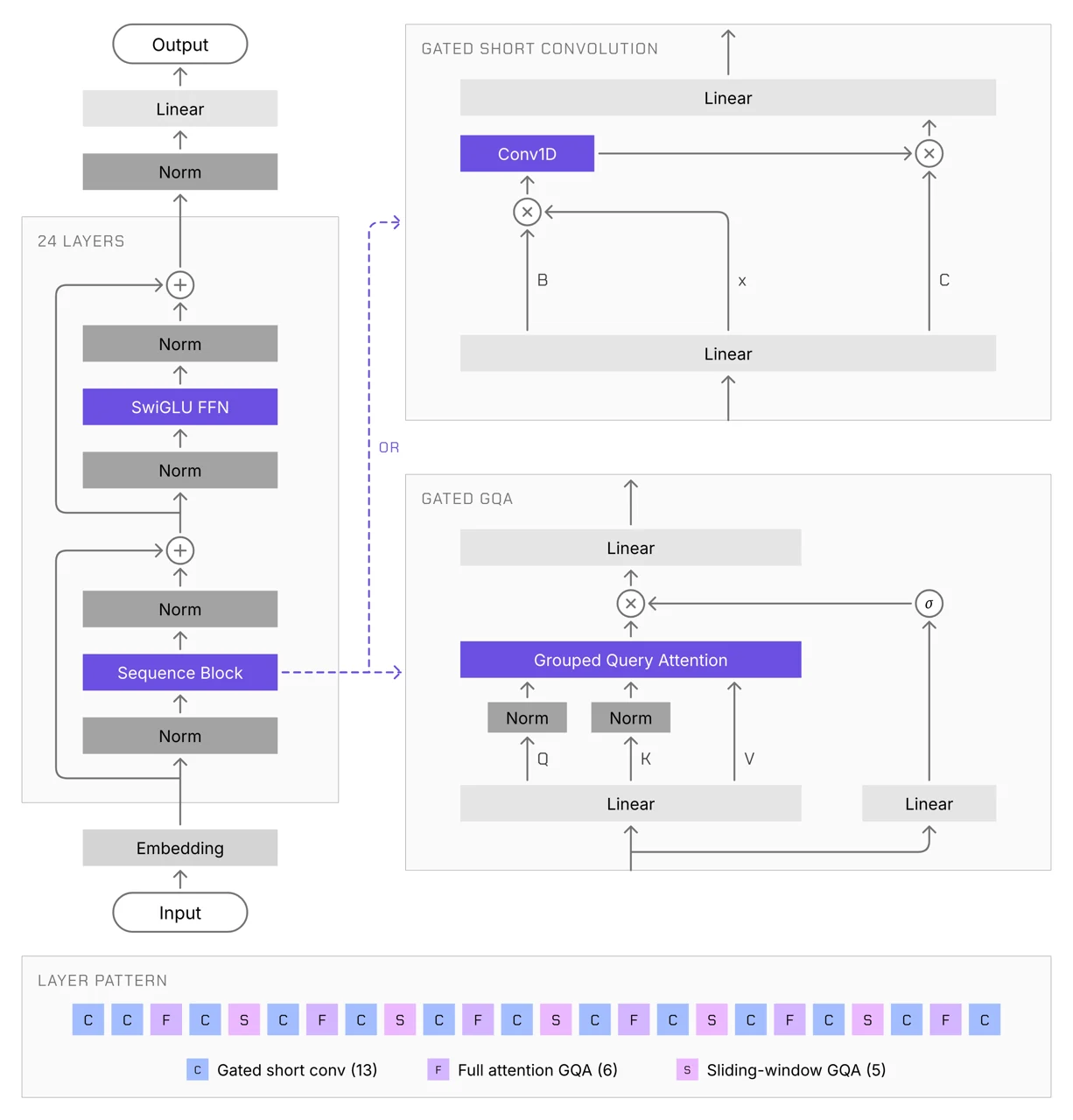
A specialized document or media-processing task does not always require the largest general-purpose model. Liquid AI’s October 27 article presents LFM3 as a family of small models designed for specialization. Its practical relevance is the connection between model choice, task data and a testable output format.
What the family covers
The article discusses text, vision, audio and combined-modality variants, with notebooks covering data preparation through evaluation. Examples include extracting structured JSON from documents or receipt photographs, answering from retrieved documents and selecting tools.
Choose a variant for the actual input and result. Image or audio support does not mean video or music generation. A media application must define the operation precisely: reading frame information, processing speech, extracting fields or handling mixed input.
Turn the announcement into a testable task
An editorial example is cataloging production assets. Suppose an application should produce a record with predefined fields from an image and short description. Define the fields and how unknown values are represented, then collect examples with clear images, poor lighting, incomplete descriptions and ambiguous cases.
Test the base model first. Record invalid structures, invented fields, missed details and answers given without enough evidence, rather than keeping only successful examples. Decide whether adaptation is needed after seeing those errors. This is a proposed procedure, not an experiment we performed with LFM3.
Specialization needs evaluation data
The authors emphasize fine-tuning for a task’s own terminology, data and tools. Their single-GPU fine-tuning claim does not establish identical requirements for every configuration. Input length, training method and dataset size affect resources and runtime.
Keep evaluation examples outside training. Otherwise, familiar inputs may create a misleading impression of performance on new material. For structured output, check JSON validity separately from the correctness of field values.
Deployment choices
The source discusses running models near the application, on devices, private infrastructure or cloud systems. The choice depends on hardware, speed, workload and the specific model’s usage terms. Smaller models still require compute and maintenance.
Editorial takeaway: begin with one measurable task and reference set, rather than selecting by name or modality count alone. This review does not enable a new VIZURAI route or change its generation models. It explains the announcement and an assessment approach for developers.
Create your own result
Choose an available model and check its price in the studio.
Sources
- Liquid AI — LFM3 Published by the source: